
It is a way to ensure they are not coming from China.
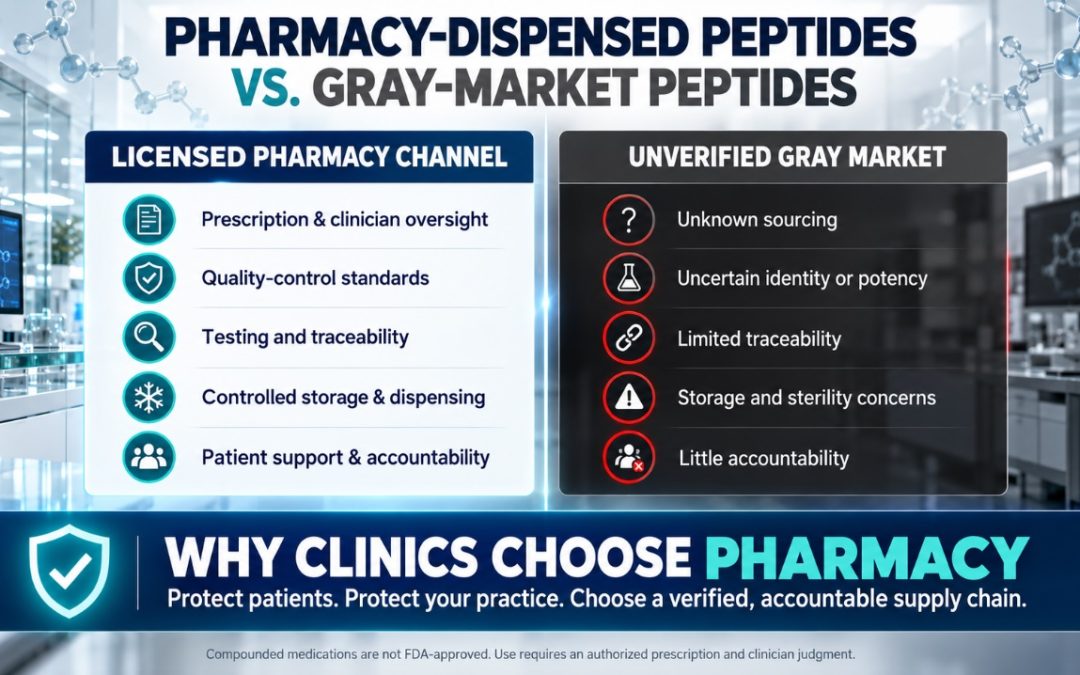
Peptides have become a popular topic in the performance and wellness world, but where those peptides come from matters just as much as how they’re used. If you’re considering peptide therapy, the safest and most reliable path is sourcing through a licensed pharmacy (such as a compounding pharmacy working with a qualified prescriber) rather than buying from gray market labs, possibly China.
What Are “Gray Market” Peptide Labs?
Gray market labs are sellers that operate outside the standard pharmaceutical supply chain. They often market peptides as “research use only”, (RUO) and sell directly to consumers without a prescription, medical oversight, or the manufacturing controls required for medications.
Even when a vendor appears professional—polished branding, batch numbers, “COAs,” or influencer endorsements—those signals do not guarantee the product is accurately dosed, sterile, or even the correct compound.
Pharmacies Operate Under Regulatory Oversight
Licensed pharmacies function within a regulated framework designed to protect patients. While requirements vary by jurisdiction, pharmacies and pharmacy partners are typically subject to standards covering sourcing, documentation, quality systems, and handling procedures.
When you choose a pharmacy channel, you’re not just buying a vial—you’re buying into a system that is built to reduce risk and increase consistency.
FDA Big Push
The FDA and DOJ are pushing all medical to only use pharmacy’s for their peptides. It is to ensure the peptides are not coming from China. There have been cases where large quantity of peptides have been seized at state ports and the “peptide” vials actually contained the drug fentanyl. A drug that is extremely deadly and can kill just by touching it. This big push is to help regulate and control peptide use.
Product Quality and Identity: You Need to Know What You’re Using
One of the biggest issues with gray market peptides is uncertainty. Even small deviations in identity or concentration can change effects, side effects, and overall outcomes.
Common quality concerns with gray market sources
- Mislabeled compounds: The vial label may not match what’s inside.
- Incorrect dosing: The concentration may be higher or lower than stated, making accurate dosing impossible.
- Degraded material: Poor temperature control and long shipping times can degrade sensitive peptides.
- Unverified purity: Impurities can increase the likelihood of adverse reactions.
Pharmacy channels are designed to reduce these unknowns through documented sourcing, standardized processes, and accountability.
Sterility Matters: Injectable Products Require Higher Standards
Many peptides are administered via injection, which makes sterility and handling non-negotiable. A sterile product reduces the risk of complications that can occur when bacteria, endotoxins, or particulate contamination are present.
Gray market operations may not have validated sterile workflows, controlled environments, or consistent cold-chain handling. Even if a product “looks fine,” contamination is not always visible.
Third-Party Testing Isn’t Always What It Seems
Gray market sellers often advertise Certificates of Analysis (COAs). While third-party testing can be valuable, the reality is that COAs can be incomplete, outdated, easy to misunderstand, or not tied to the specific vial you receive.
Common COA red flags
- No verifiable chain-of-custody: No clear link between the test sample and your product batch.
- Limited testing scope: Testing may show identity but not sterility, endotoxins, residual solvents, or contaminants.
- Inconsistent lab standards: Not all labs test to the same rigor or methodology.
- Reused documents: COAs may be recycled across batches or products.
Pharmacy sourcing typically involves stricter documentation and accountability, which helps reduce the “paper shield” problem that can occur with unregulated sellers.
Medical Oversight Protects Your Health and Your Results
Peptide therapy decisions should factor in your health history, current medications, goals, and lab markers. Using peptides without clinical oversight can increase the likelihood of side effects, ineffective protocols, or interactions you didn’t anticipate.
When peptides are prescribed and dispensed through appropriate channels, you benefit from a structure that supports responsible use, such as:
- Appropriate screening: Determining whether a peptide is suitable for you.
- Goal-based planning: Choosing an approach aligned with your outcomes.
- Monitoring: Adjusting based on response, labs, and tolerability.
- Education: Guidance on storage, handling, and safe administration practices.
Important: This article is for educational purposes and is not medical advice. Always consult a qualified healthcare professional.
Legal and Ethical Considerations: Avoid Unnecessary Risk
Gray market peptide purchasing can create legal and compliance exposure depending on your location and the specific compound. Products labeled “research use only” are not intended for human use, and purchasing them for personal administration can introduce avoidable risk.
Choosing pharmacy-dispensed options helps ensure you’re operating within legitimate medical pathways, with clear documentation and professional standards.
Consistency and Repeatability: The Missing Ingredient in Gray Market Peptides
If your peptide supply changes from one order to the next—different potency, different filler content, different storage conditions—you can’t reliably evaluate what works. Consistency is essential for tracking progress, making adjustments, and avoiding surprises.
Pharmacy sourcing is built around repeatability: the same product standards, predictable concentration, and better continuity over time.
How to Choose a Safe, High-Quality Peptide Source
If you’re evaluating where to get peptides, prioritize safety and verification over marketing claims. Here are practical indicators that you’re on the right track:
- Use a licensed pharmacy pathway rather than direct-to-consumer gray market sites.
- Work with a qualified medical professional for assessment, dosing strategy, and monitoring.
- Confirm proper handling and storage guidance (temperature, light exposure, reconstitution instructions where applicable).
- Be cautious with “too good to be true” pricing, which can signal shortcuts in sourcing or quality.
The Juke Performance Standard: Quality First, Always
At Juke Performance, we believe performance and longevity should never come at the cost of safety. If you’re exploring peptide therapy, the best move is to prioritize pharmacy-grade sourcing and professional oversight so you can focus on your goals with confidence.
If you want help understanding what a responsible peptide approach looks like for your situation, connect with the Juke Performance team and we’ll point you toward a safer, more reliable path.
Keywords: pharmacy peptides, gray market peptides, peptide safety, compounded peptides, peptide therapy, peptide quality, sterile peptides